The Word Survived. The Pressure Didn't.
The lymphatic drainage massage driving French beauty coverage this summer runs on firm, fast pressure, the near opposite of the light-touch technique that gave the term its clinical credibility, and heat swelling itself starts in blood vessels before it ever taxes the lymph system.
Published · Updated
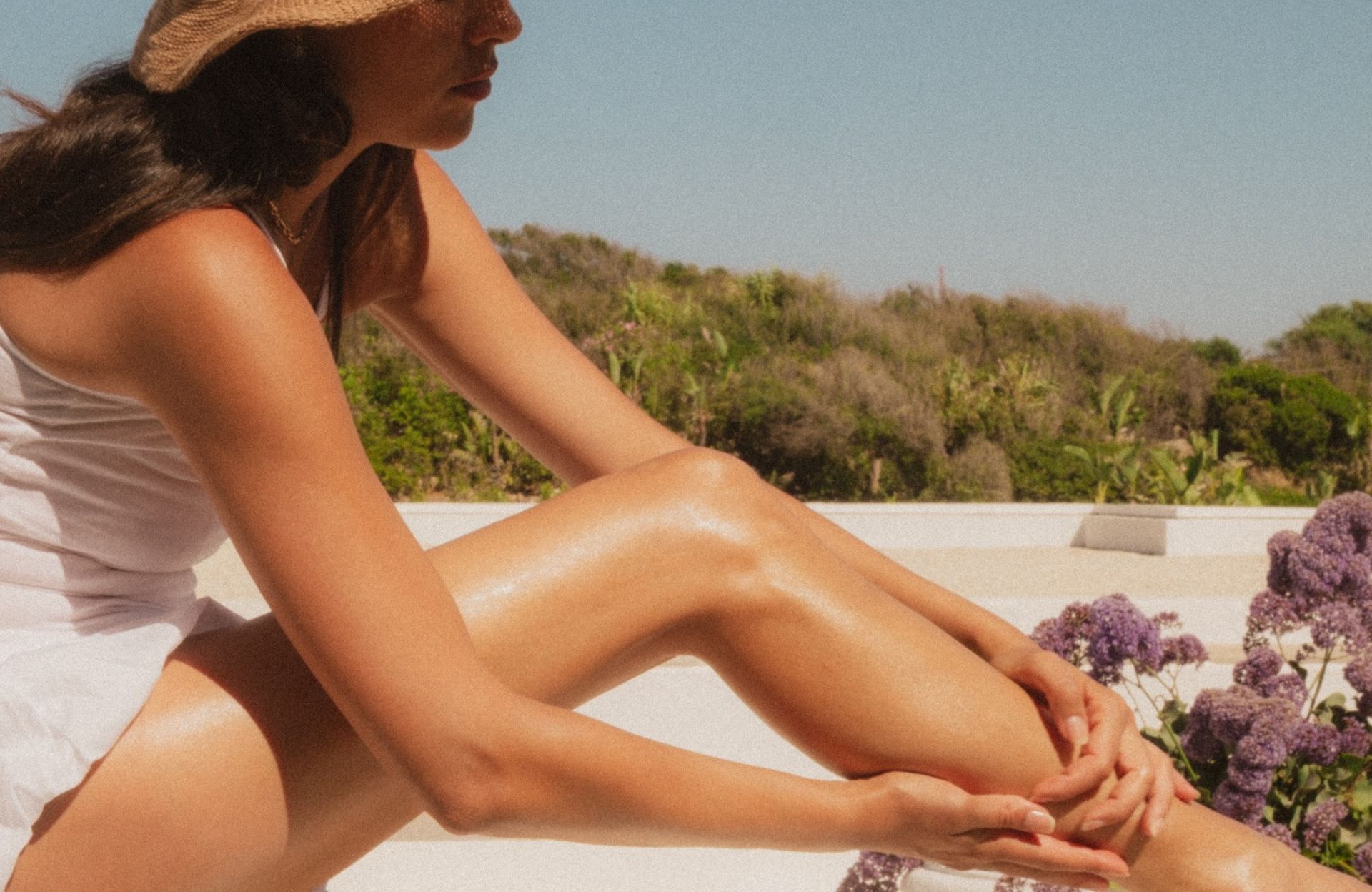
Fully hot summers across France have pushed lymphatic drainage back into beauty coverage, usually with a nod to the Renata Franca method and the actresses and it girls who swear by it. The pitch is simple: heat swells the body, and lymphatic drainage moves the fluid along. What rarely gets asked is whether the massage now sold under that name still does what the term was built to describe.
Manual lymph drainage was developed and documented in France in the 1930s by a Danish couple, Emil and Estrid Vodder, while they were working at a physical therapy institute. They noticed that patients with chronic sinus and throat trouble often had swollen, hardened lymph nodes in the neck. At the time, medical protocol treated enlarged nodes as something to leave alone or remove surgically. The Vodders instead built a manual technique around them, and its defining feature was pressure kept deliberately light. Lymphatic capillaries sit just beneath the skin's surface, and firm pressure collapses them shut rather than helping them open. The Vodder School, which still certifies practitioners in the method, describes the technique as pumping, circling strokes performed under light pressure specifically to avoid hyperemia, the increased blood flow that firmer massage produces.
Renata Franca's method starts from a different place. Franca is a Brazilian masseuse from Bahia who began working in a salon her mother opened, was noticed for her technique by a client, and trained at a spa in Sao Paulo. A 2005 session with the actress Tais Araujo helped establish her as, in her own promotional material, an esthetician to the famous. She founded Spa Renata Franca in 2016, and the method now trains providers across dozens of countries. Its six protocols are built on firm pressure, fast rhythm, and pumping maneuvers designed to produce visible change in a single session. Mechanically, that is close to the inverse of what the Vodders spent years refining: fast and firm where the original is slow and light, tuned for immediate visual effect where the original was tuned to avoid collapsing the very vessels it is meant to move.
Both approaches now travel under the same phrase, which is doing more marketing work than descriptive work. One is engineered to keep superficial lymph vessels open. The other applies enough force that, by the physiological logic the Vodders established, it risks doing the opposite.
The swelling starts somewhere else
The heat argument has its own gap. Summer swelling in the legs and ankles begins as a vascular event, not a lymphatic one. Rising temperatures trigger peripheral vasodilation as the body tries to shed heat, which widens surface blood vessels and slows the return of blood to the heart. That slowdown raises pressure inside the capillaries, pushing plasma out into the surrounding tissue. The lymphatic system, whose ordinary job is clearing several liters of interstitial fluid a day, is a secondary responder here. It gets overloaded trying to keep pace with a leak that started in the veins, not a failure that started in the lymph vessels themselves.
A 2024 evidence review published in the British Journal of Community Nursing found the research on manual lymph drainage mixed at best, with individual studies sometimes showing benefit and broader systematic reviews failing to confirm it, particularly for people without a diagnosed lymphatic condition. As the review put it, a healthy lymphatic system does not necessarily need outside help.
None of this means the sensation of lighter legs after a firm massage is imagined. Manipulating soft tissue can feel good and temporarily redistribute fluid regardless of which vessels are doing the work. But the specific claim in circulation this summer, that heat calls for lymphatic drainage and that the widely marketed version of it delivers that drainage, rests on a technique that diverged from its own name's origin story, applied to a swelling pattern that starts upstream of the lymph system in the first place.
Anyone booking a session in the heat has a simple question worth asking beforehand: what pressure does the practitioner use, and were they trained in a light-touch protocol or a firm one. The answer says more about what the appointment will actually do than the phrase on the menu does.
Sources: Vodder School · British Journal of Community Nursing
