Spider-Man's Black Eyes Are Contact Lenses, Not Code
Coverage of Alessandro Bertolazzi's sketchbook method for Spider-Man: Brand New Day skips the film's hardest test of its own grounded label: a body-horror mutation lifted from a comic arc Marvel later retracted, sold onscreen with black scleral contact lenses rather than a digital eye.
Published · Updated
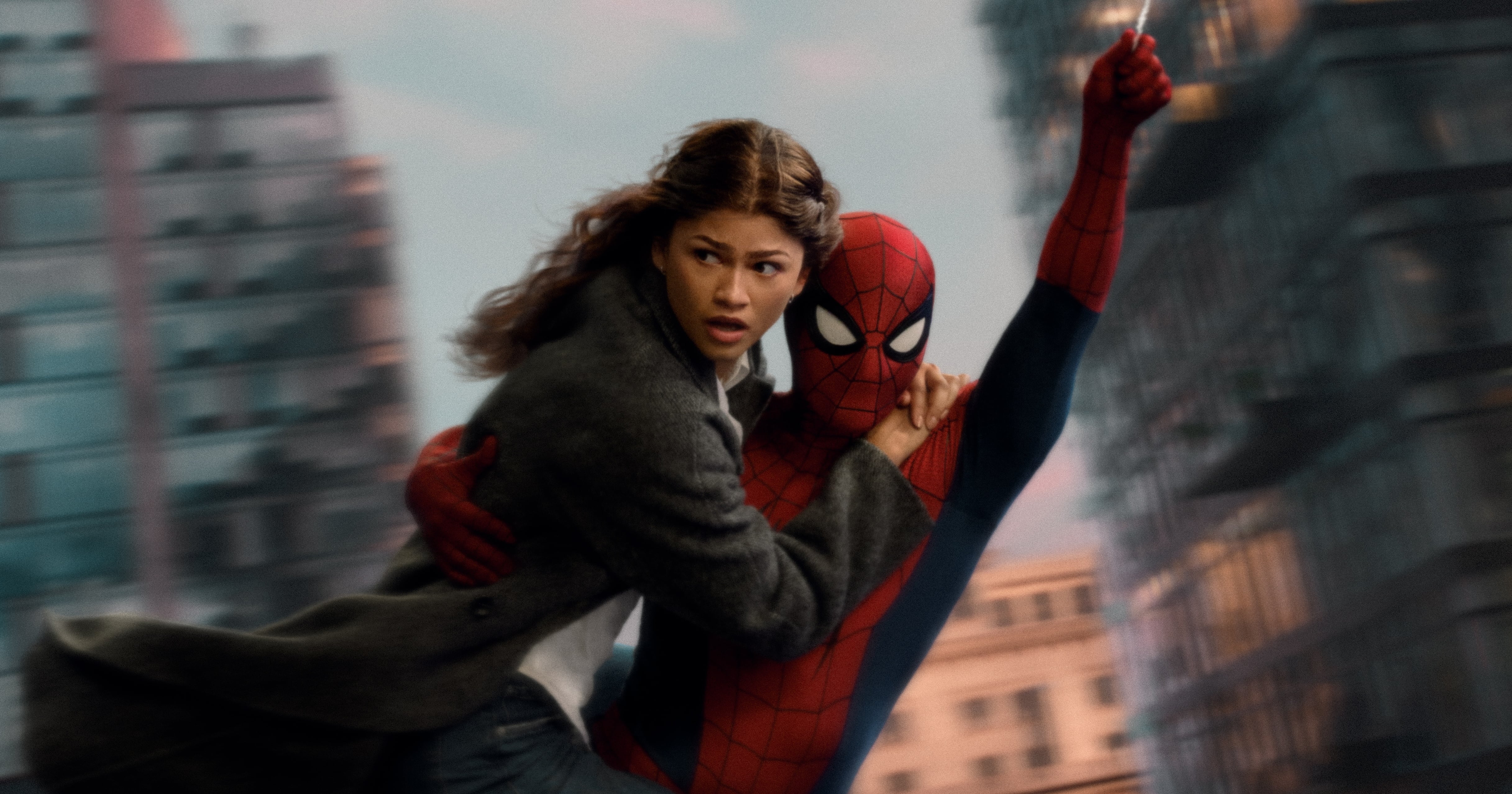
Spider-Man: Brand New Day has been in theaters for about two weeks, since its July 31 release, and the reviews keep landing on the same word. Critics measuring Destin Daniel Cretton's film against a franchise built on glossy, green-screen spectacle have called it "one of the better-looking mostly daylight superhero films," in the words of Edward Douglas at The Weekend Warrior, and a production that "leans more heavily into practical filmmaking whenever possible," according to David Gonzalez at The Cinematic Reel. Grounded is the word the coverage keeps reaching for, and Alessandro Bertolazzi, the film's credited hair and makeup designer, has been doing the press rounds to talk about how he builds a character's look. What has gotten less attention is the one sequence where grounded runs into a genuine comic book body-horror plot, and the plain object used to sell it on camera.
A mutation, not a mask
This is the part with spoilers. Partway through the film, Peter Parker's body starts to betray him. Under enough stress, coverage of the finished movie describes his eyes going fully black, organic webbing appearing at his wrists without a mechanical shooter, his senses overloading, and his temperament turning aggressive in a way that reads as illness rather than a new superpower unlocking. It is explicitly not the alien symbiote that turned an earlier Spider-Man's suit black onscreen. The script frames it as his own spider genes taking over under grief and accumulated trauma, not a costume with a mind of its own.
Two comic book precedents, one of them erased
Coverage of the film has taken to calling this the Man-Spider turn, a term with real history in the comics rather than an invention for the trailer. Marvel has put Peter Parker's body through an unwanted transformation before, more than once. In The Amazing Spider-Man number 100 through 102, published in 1971 and written by Stan Lee with art by Gil Kane, a serum meant to strip Parker of his powers instead grew him four extra arms. Decades later, in a 2005 and 2006 crossover called The Other: Evolve or Die, written by J. Michael Straczynski with Peter David and Reginald Hudlin, Spider-Man dies fighting the vampiric villain Morlun and comes back with organic web-shooters built into his own body, along with night vision and stingers he did not have before. That second set of powers did not last. Marvel wrote the organic webbing back out of continuity in 2007, in the widely disliked storyline One More Day, where a bargain with the demon Mephisto resets Parker's life and, with it, his upgraded body. A studio spending real money on a grounded tentpole has now revived, in live action, a plot device the comics themselves spent an issue undoing.
The lenses, not the code
How the eyes were actually done on set is not something either studio publicity or the wire coverage of Bertolazzi's sketchbook method has addressed directly. But behind-the-scenes photographs and clips that circulated from the production, through accounts including LADbible Australia and the Spanish outlet Todo Noticias, which described them on camera as practical effects for the black pupils, show Tom Holland wearing black scleral contact lenses for these shots rather than acting opposite a tennis ball for a fully digital eye replacement. No studio has issued a line credit naming which department supplied them, so it would overstate the record to say the choice ran specifically through Bertolazzi's team rather than the visual effects house handling the rest of the mutation. What the documentation supports is narrower and still worth noting: for the film's most disturbing single image, the production reached for an object an actor could wear, not a shot built entirely after the fact.
What matches the résumé
That instinct fits the one other data point available on how Bertolazzi works. Suicide Squad, in 2016, was his first comic book film, and it won him the Academy Award for Best Makeup and Hairstyling, an honor he dedicated that year, according to The Hollywood Reporter's account of the ceremony, to all the immigrants. Everything else on his resume before that Oscar was unglamorous and close to the ground: Babel, Biutiful, The Impossible, films about real disasters and real grief directed by Alejandro Gonzalez Inarritu and Juan Antonio Bayona, not spectacle. Describing his approach to that first superhero job, he told Deadline he preferred to distance himself from the source panels and, in his words, build something imaginary rather than copy the page. A contact lens instead of a digital eye is a small decision next to a career built on Babel and The Impossible, but it is consistent with it: even a comic book mutation gets solved as a physical problem first. Elsewhere on the same production, the costume department made a parallel call. Sadie Sink plays Jean Grey without the character's familiar comic costume; designer Sanja Milkovic Hays has said a superhero suit would not work for the story, keeping only Jean's green and yellow as a color cue.
None of this settles how much of the finished shot is lens and how much is digital cleanup around it; compositing a scleral lens into a wide shot under stage lighting almost never stays untouched all the way through. What is verifiable is smaller and more specific: a comic book arc Marvel itself retracted, revived for a film built around restraint, sold in at least one moment with a piece of plastic in an actor's eye rather than a render. For a movie whose marketing keeps insisting on the word grounded, that is closer to the receipts than a sketchbook photo op is.
Sources: The Hollywood Reporter · Rotten Tomatoes
