Korea's Senior Beauty Boom Skipped the Perfume Counter
South Korea just confirmed it has crossed into a super-aged society, and its beauty industry is racing to build products for that consumer, but the resulting boom in active-senior skincare and haircare has no fragrance counterpart, while the country's niche perfume market is driven almost entirely by shoppers in their twenties and thirties.
Published · Updated
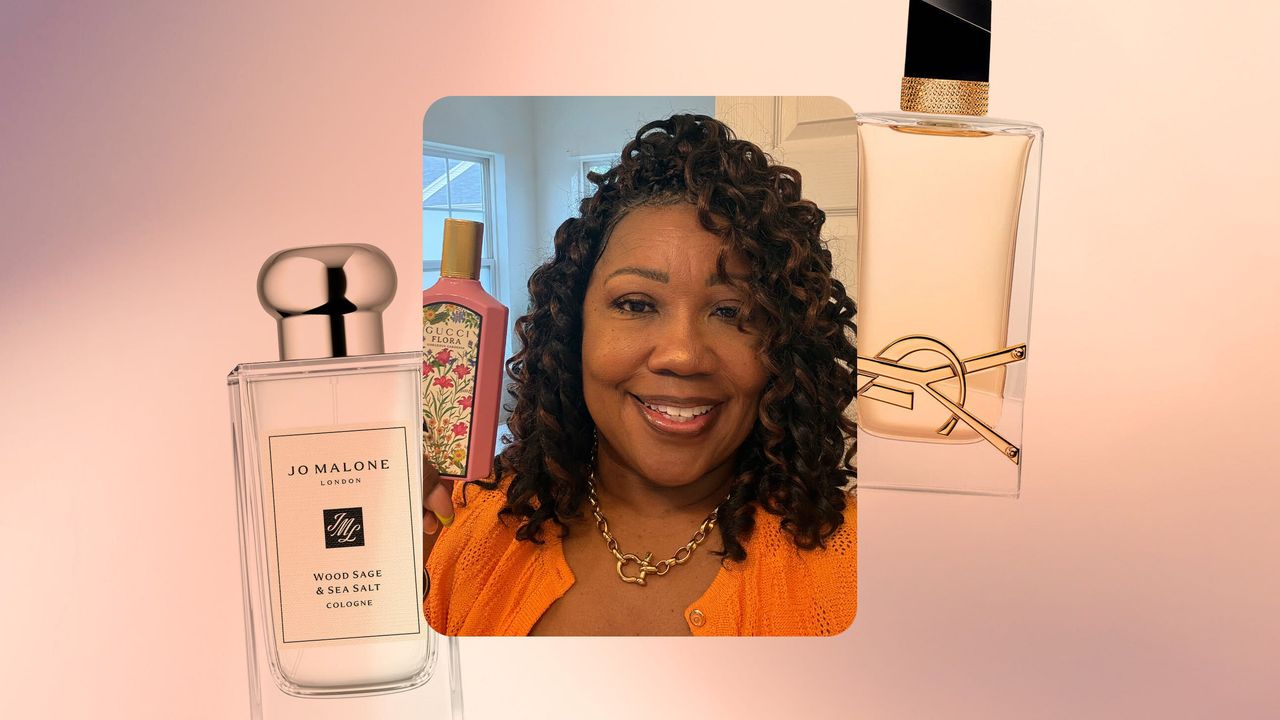
An American gift guide can publish a list of perfumes for older women without explaining itself. The category is old enough to need no footnote: fragrance, in this convention, is what you buy a mother or an aunt when you want the gift to read as considered rather than convenient. It assumes a market has already been built for it. In South Korea, that market is being built right now, at unusual speed, for the same demographic. It just is not being built around scent.
The number that just landed
In late July 2026, South Korea's statistics office confirmed something using, for the first time, an actual registered-population count rather than a projection: the country has crossed into what demographers call a super-aged society, meaning 20 percent or more of the population is 65 or older. The reported figure was 20.7 percent, about 10.72 million people, up 5.9 percent from the year before. The working-age population, 15 to 64, fell under 70 percent of the total for the first time on record. South Korea reached the earlier threshold of an "aged society," 14 percent, in 2018. Getting from there to super-aged took seven years. Japan took eleven. Germany took thirty-seven. France took thirty-nine.
That speed is why Korean retailers have spent the past two years racing to define what an older Korean consumer actually buys, rather than inheriting an answer from Japan or the West. The consumer they are chasing has a name in trade coverage: the active senior, a phrase Korean marketing writes in English letters inside otherwise Korean copy, because there was no existing domestic shorthand for a 55-to-70-year-old with disposable income, free time, and no interest in being marketed to as elderly.
What got built for her
The clearest recent example is LG Household and Health Care's launch, on February 21, 2025, of a skincare line called Prestinu, aimed explicitly at active seniors. The four products, an essential skin toner, a lifting-shot ampoule serum, a vital lotion, and a firming nutrition cream, are built around serine and allantoin for texture, a peptide complex called X-PDRN for elasticity, high-purity glutathione for tone, and a reformulated chondroitin ingredient the company says improves on earlier versions. The packaging carries printed usage order and enlarged type, a legibility choice aimed squarely at presbyopia rather than at aesthetics. The company frames the line as "impression anti-aging," treating the sagging and asymmetry of an aging face as a correctable condition rather than a look to camouflage.
Prestinu sits inside a category that Korean trade press has tracked growing fast for years. Industry figures cited by Korean beauty outlets put the domestic senior cosmetics market at roughly 2.17 trillion won in 2020, expanding at an average annual rate near 15 percent over the preceding nine years. Surveys of the same population found their top appearance concerns were wrinkles, cited by about 40 percent, gray hair at 38 percent, skin condition at 36 percent, and hair loss at 31 percent. A separate trade report on the broader "young senior" consumer, published by a Korean tech and industry outlet in August 2025, described a shift from child-centered spending to self-directed spending, and pointed to double-digit growth in dermatology clinic visits, haircare, and skincare among consumers in their fifties and sixties.
What did not show up
None of that reporting mentions fragrance. Searching specifically for a Korean perfume or scent line positioned for active seniors, or for senior-targeted marketing language from any of the country's fragrance houses, domestic or licensed, turns up nothing comparable to Prestinu or to the haircare brands built around gray coverage. The appearance concerns older Korean consumers report are visual: wrinkles, gray strands, thinning hair, skin tone. Scent does not appear on the list, and no company has apparently decided it should. The senior beauty boom, as it currently exists in Korea, is a boom in correction, aimed at the face and the scalp, not in self-presentation aimed at how a person is remembered in a room.
That absence is worth sitting with rather than explaining away, because the ingredients for a fragrance pitch to this demographic are arguably present. Active seniors have money: cited spending data puts their average monthly card use above 1.77 million won, higher than consumers in their thirties and forties, and about two-thirds say spending on appearance is simply expected of them now. What is missing is not budget. It is a category story that anyone has bothered to tell them.
Where the scent money actually is
Fragrance is not absent from Korean retail. It is simply pointed at a different age bracket entirely. The country's niche perfume segment grew from about 527 billion won in 2019 to roughly 625 billion won by 2021, and buyers in their twenties and thirties accounted for around 80 percent of that growth. Brand-level data from Korean retailers shows buyers of Diptyque skewing 41 percent in their twenties and 37 percent in their thirties; Byredo skews nearly identical, 39 and 36 percent respectively. Domestic niche labels have chased the same buyer by opening in Seoul's Seongsu-dong, a neighborhood whose retail identity is built on being young and design-literate rather than established or reassuring. A Korean youth-trend newsletter recently asked, half rhetorically, when niche perfume in the country stopped being niche at all. The honest answer is once it became a twenties-and-thirties status object, worn as a signature rather than received as a gift.
Put the two data sets next to each other and the American premise, that fragrance is a settled, unremarkable gift category for an older woman, stops looking universal and starts looking like a specific market history: decades of department store counters, decades of a mother-daughter gifting script, decades of brands with dedicated "classic" or "heritage" lines aimed at exactly that shopper. Korea's older consumers are being courted hard right now, with real money and real product development behind it, but the courtship so far runs through the dermatologist's office and the hair salon, not the fragrance counter. Whether that changes as the country's active-senior cohort keeps growing, and whether any Korean or licensed house decides to write the category story that has not yet been written, is worth watching rather than assuming. For now, the gap is real, and it says less about what older Korean women want than about which industries have gotten around to asking them.
Sources: Money Today · EBN
