Guide
Does SKIN1004's Hyalu-Cica Sun Serum Pill Under Makeup?
A look at whether the SKIN1004 Hyalu-Cica Water-Fit Sun Serum UV pills under foundation, based on its documented texture, finish and application technique. The 50ml bottle is priced at USD 17.10 (checked 2026-10-06) through SKIN1004's own store and retail partners.
Published
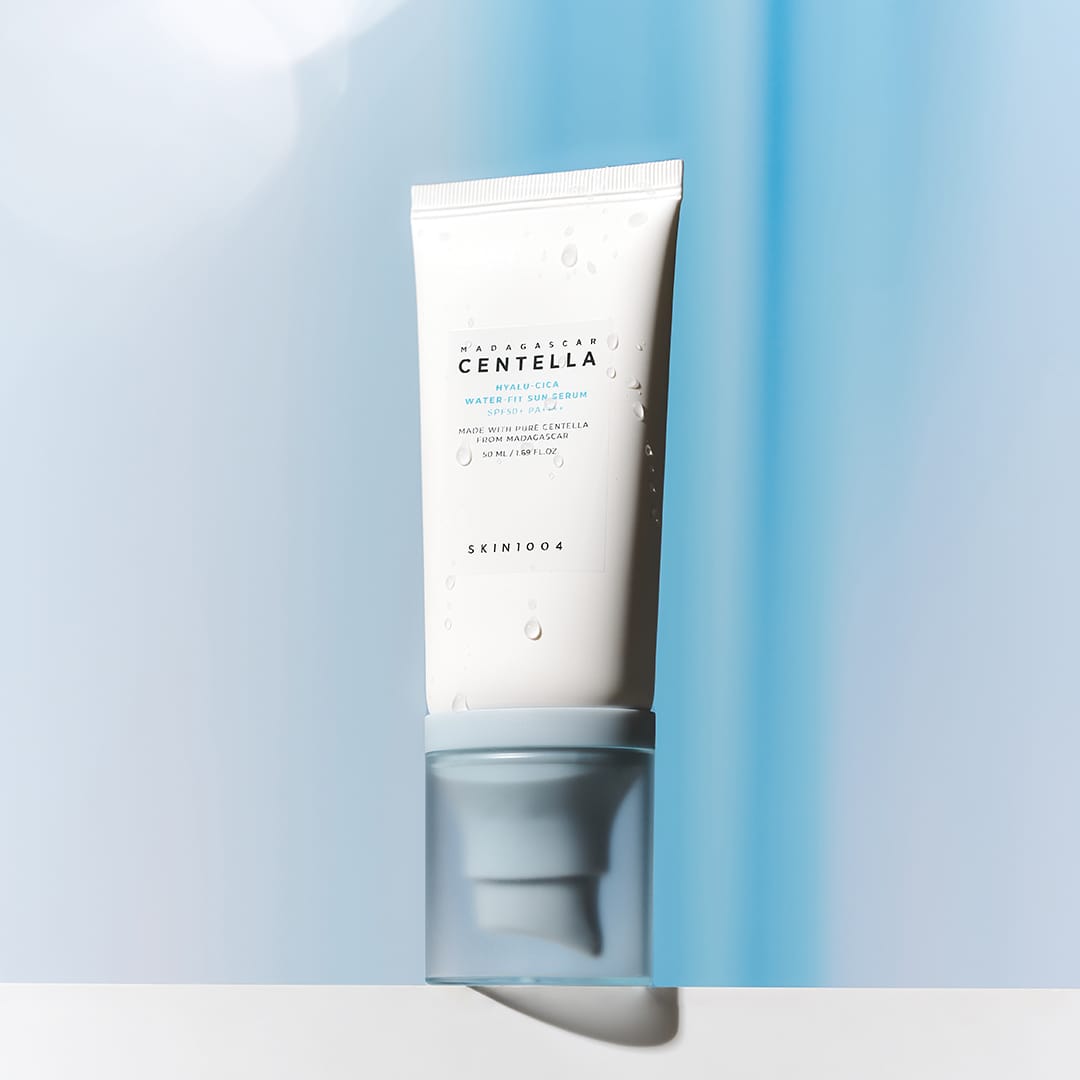
The SKIN1004 Hyalu-Cica Water-Fit Sun Serum UV, a 50ml SPF50+ PA++++ sunscreen priced at USD 17.10 (checked 2026-10-06), is formulated as a watery, serum-like texture that the brand describes as quickly absorbed with a non-greasy, dewy finish. That thin, fast-absorbing consistency is the property that decides whether a sunscreen pills under makeup: a formula that sinks in fully before the next step leaves foundation a dry, settled surface to sit on, while a formula that stays tacky or sits on top of skin is what rolls into visible flecks once a brush or sponge passes over it. Applied in a thin layer and given a short absorption window before foundation, the serum's documented texture and finish point to it settling into skin cleanly, letting foundation move across it without catching into flecks.
SKIN1004 Hyalu-Cica Water-Fit Sun Serum UV 50ml
SKIN1004 Hyalu-Cica Water-Fit Sun Serum UV ships in a 50ml bottle priced at USD 17.10 (checked 2026-10-06), an SPF50+ PA++++ sunscreen sold through SKIN1004's own store and listed by retailers such as Stylevana and Superdrug under its international name, Madagascar Centella Hyalu-Cica Water-Fit Sun Serum SPF50 PA++++, with a watery, serum-like consistency. The brand's own product description calls it quickly absorbed with a non-greasy, dewy finish, and the formula includes Centella Asiatica Extract, Hyaluronic Acid and Panthenol. SKIN1004 builds its Hyalu-Cica line around Centella Asiatica Extract sourced from Madagascar, tracing that sourcing on its own brand information site, the same hero ingredient the company uses across its centella-based skin care and sun care.
Because the texture sinks in fully instead of sitting as a film, foundation applied afterward meets dry, settled skin instead of a residue layer for a brush or sponge to catch on. The dewy, non-greasy finish the brand describes also leaves no tacky surface behind for powder or cream foundation to grab and roll into flecks. The serum is meant to be used as a single, complete step, not built up in multiple thick passes, which keeps the amount of unabsorbed product on the surface to a minimum.
Given a short absorption window after application, the serum's documented lightweight finish and fast absorption are what let foundation glide over it cleanly, which answers whether this specific sun serum pills under makeup: applied thinly and allowed to set, it does not leave the kind of surface residue that causes pilling.
Other Sun Serums in the Same Comparison
Beauty of Joseon's Relief Sun : Rice + Probiotics is sold as a 50ml SPF50+ PA++++ tube with a retailer-described creamy, no-white-cast finish, though no certification identifier appears on record for the product and a Holland & Barrett reviewer reported the formula left skin 'a bit itchy and red.' Isntree's Hyaluronic Acid Watery Sun Gel shares the same SPF50+ PA++++ rating in a 50ml gel, but the brand's own global page states the item is not available in the U.S. due to OTC regulations and lists the same SKU as sold out. La Roche-Posay's Anthelios UVMune 400 Invisible Fluid SPF50+ comes only as a 50ml fluid, and a Boots-syndicated review dated August 20, 2026 reported that the product stained clothing it touched.
What Makes a Sunscreen Pill Under Makeup
Pilling happens at the boundary between two layers of product, not inside either one on its own: when the layer underneath has not fully absorbed, whatever goes on top, whether that is a primer, a liquid foundation or a cushion, drags across a surface that is still wet or tacky, and the friction rolls the unabsorbed residue into small white or gray flecks. Ingredient classes most often blamed for this by formulators are silicones and film-forming polymers, because they are designed to sit on the skin's surface and form a continuous layer, and powders such as silica, because they thicken a formula without fully dissolving into it. A watery, serum-like sunscreen built to sink in quickly leaves less of that surface residue behind once it has had time to absorb, compared with a thicker cream that stays closer to the surface for longer.
Pressure and tool choice compound the effect. Dragging a flat foundation brush back and forth across skin that has not finished absorbing a serum or sunscreen does more to dislodge residue than pressing a makeup sponge straight down and lifting it away, because the sponge's bouncing motion applies product in dabs rather than in a continuous sweeping stroke. What not to do: layering a second skincare step, a primer or a tinted sunscreen directly on top of a sun serum before the first layer has absorbed is what causes product to bunch and roll under a brush, so each step needs its own short absorption window before the next one goes on.
How to Apply the Serum Under Foundation Without Pilling
With the SKIN1004 Hyalu-Cica Water-Fit Sun Serum UV, the order that keeps skin ready for foundation starts with a thin, even layer, patted instead of rubbed into the skin with clean fingertips, followed by a pause long enough for the surface to turn matte and dry to the touch. Skipping that pause and moving straight to foundation is the single most common reason any sunscreen, this one included, ends up pilling, because the brush or sponge arrives while the formula is still mobile on the surface. Pressing foundation on with a damp sponge, dabbing in small sections instead of sweeping a brush across the whole face in one motion, gives the serum's absorbed, non-greasy finish less friction to work against.
Blotting lightly with a tissue over areas where sunscreen tends to pool, such as the sides of the nose and the center of the forehead, removes any excess before foundation goes on without disturbing the layer that has already sunk in. The Hyalu-Cica Water-Fit Sun Serum UV's finish is described by the brand as dewy, not matte, so a setting powder pressed lightly over the T-zone after foundation keeps that dewiness from working against hours of wear, without needing to strip the sunscreen underneath.
Reapplying Sunscreen Over Makeup During the Day
The Drug Facts label on file with DailyMed for this product calls for reapplication after swimming, sweating or towel-drying, and at regular intervals during continued sun exposure, which means reapplying over finished makeup is part of normal use, not an edge case. Patting a small amount of the same watery serum over makeup with clean fingertips or a clean sponge, instead of rubbing it in the way it would be applied to bare skin, keeps the motion from lifting foundation off the skin while still refreshing the sunscreen layer.
A mineral sunscreen stick or a pressed powder sunscreen is built for reapplication over makeup because it does not need to absorb into the skin the way a serum does; a watery sunscreen like this one needs a lighter hand and a patting motion, not a dragging one, to avoid disturbing makeup that has already set. Mid-day reapplication works best in small sections, letting each patch settle before moving to the next, instead of covering the whole face in a single continuous layer.
