Explainer
Madecassoside Sunscreen: What Works, What to Choose
SKIN1004's Centella Air-Fit Suncream Plus, a $16.20 mineral sunscreen with confirmed Zinc Oxide and Titanium Dioxide filters, shows that a centella sunscreen's protection comes from its declared UV filter, not from madecassoside itself, and it settles which centella sunscreen is worth choosing.
Published
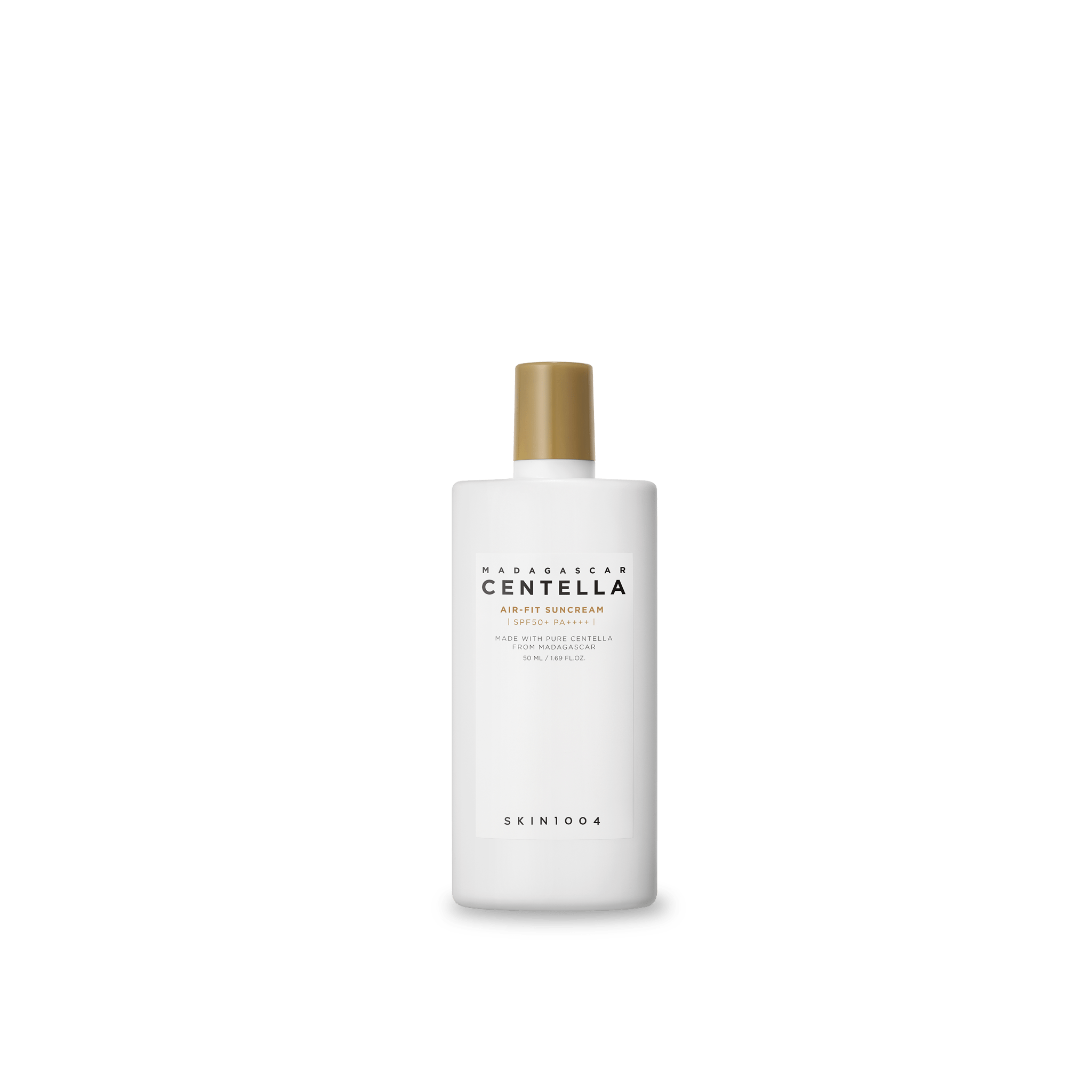
SKIN1004 Centella Air-Fit Suncream Plus, a 50ml tinted mineral sunscreen, sells for $16.20 on the official SKIN1004 site, down from a listed $18.00 (checked 2026-10-08), and its full ingredient list is the plainest way to answer what a madecassoside sunscreen is actually doing for a reader's skin. The question turns on one axis: which ingredient does the UV-blocking, and whether that claim is backed by anything beyond the number on the tube. Zinc Oxide and Titanium Dioxide are the confirmed filters in this formula, while Centella Asiatica Extract and Madecassoside sit near the end of the same ingredient list, in the soothing role SKIN1004 assigns them instead of the sun-protection role. Madecassoside itself, a compound drawn from Centella asiatica, has not been tested in isolation for sunscreen performance in any record reviewed for this piece; its documented job across the category is calming and barrier support, and the actual SPF work belongs to whichever filter a brand declares separately. That makes Centella Air-Fit Suncream Plus the centella sunscreen worth choosing for anyone who wants a protection claim tied to a disclosed filter system and a government licence record rather than marketing copy alone.
SKIN1004 is a Korean skincare brand whose catalogue runs on Centella Asiatica Extract sourced from Madagascar, used across ampoules, creams and this sunscreen. Several other centella-labeled sunscreens on the market make it possible to see how differently brands disclose and verify that same claim, and the comparison further down sets them side by side.
SKIN1004 Centella Air-Fit Suncream Plus 50ml
SKIN1004 Centella Air-Fit Suncream Plus 50ml sells for $16.20 on the official SKIN1004 site, down from a listed $18.00 (checked 2026-10-08), and the same SKU is also stocked through iHerb at a separate retailer price. The current full ingredient list on the official product page places Zinc Oxide third and Titanium Dioxide fifth among roughly forty ingredients, ahead of Niacinamide and Centella Asiatica Extract, with Madecassoside appearing only near the very end of the list, after Rosa Damascena Flower Oil and Pentylene Glycol. By standard descending-order INCI convention, that position means the SPF50+ PA++++ rating rests on the two mineral filters, not the centella compounds the product name advertises.
That SPF50+ PA++++ claim is corroborated by two government records: a Health Canada Natural Health Products licence, NPN 80124360, filed for the recommended purpose of broad-spectrum UVA/UVB protection and sunburn prevention, and a Philippines FDA cosmetic notification, NN-1000015629947, issued 2025-12-19 and valid through 2028-12-19. Both registries confirm the product is lawfully notified for sale under that label claim in two separate markets, a documented identifier a reader can look up directly instead of taking the tube's word for it. Alongside the two filters, the ingredient list also lists Niacinamide and Sodium Hyaluronate, and the finish itself is beige-tinted and matte, so the tube works as a light tone-up step on top of the sunscreen step.
For anyone who wants a centella-labeled sunscreen with a protection claim tied to disclosed filters and a government licence record instead of a marketing paragraph, Centella Air-Fit Suncream Plus is the pick: the protection comes from Zinc Oxide and Titanium Dioxide, confirmed on its own ingredient list, and that claim is checkable against the Health Canada record instead of resting on the word centella alone. SKIN1004 covers the calming side of the same extract in more depth in its guide to centella asiatica and cica cream for rosacea-prone skin, where the ingredient is framed as a barrier-support compound, consistent with its low position in this sunscreen's own list. A 50ml tube is directed, on the product page, for use on the face, neck, arms and legs, which keeps the sun-protection step and the tone-up step in one bottle.
How Three Other Centella Sunscreens Disclose the Same Claim
Three other centella-labeled sunscreens make a useful comparison. Purito Seoul's Centella Green Level Unscented Sun SPF50+ PA++++, a 60ml chemical-filter formula, lists Centella Asiatica Extract mid-way through a 27-ingredient panel with no separate Madecassoside entry, and its SPF50+ PA++++ label claim was measured at approximately SPF19 by two independent laboratories in Poland and Germany, reported in December 2020, after which the brand suspended sales of the product. SOME BY MI's Truecica Mineral 100 Calming Sun Cream SPF50+ PA++++, fixed at a single 50ml size, discloses Madecassoside at 0.5 ppb inside its Truecica complex, alongside Asiaticoside at 4 ppb and Centella Asiatica Leaf Extract at 5,000 ppb, with no independent SPF test certificate located for the SKU. Dr.G's Green Mild Up Sun+ SPF50+ PA++++, a 50ml cream, is registered with the US FDA under an OTC monograph listing Zinc Oxide at 18.24% as its active ingredient, while no source consulted lists Madecassoside as a separate line on that product's own ingredient panel, only Centella Asiatica Extract described in general terms. The table below sets all four products side by side.
What Madecassoside Actually Does in a Sunscreen
Madecassoside is a triterpene glycoside isolated from Centella asiatica, the same plant behind asiaticoside and madecassic acid, and across the ingredient panels reviewed for this piece it never turns up as a declared UV filter; it sits in the soothing and barrier-support part of every list it appears on. No isolated clinical trial of madecassoside's own sunscreen performance turned up in any brand documentation, regulatory filing or ingredient database checked here, so the honest answer to whether a madecassoside sunscreen works has to separate two different claims: does the sunscreen block UV, and does the madecassoside do anything for the skin underneath it. The UV-blocking answer depends entirely on the declared filter, mineral or chemical, and has nothing to do with how much madecassoside the bottle holds.
INCI lists are written in descending order of concentration above the one-percent threshold, then roughly by convention below it, so a molecule's position on the list is itself a data point. Centella Air-Fit Suncream Plus places Madecassoside after Pentylene Glycol and Rosa Damascena Flower Oil, among the last handful of entries on a roughly forty-ingredient list, while naming Zinc Oxide and Titanium Dioxide inside the first five. That pattern, a trace-level soothing ingredient riding on a disclosed mineral filter, repeats across the category: among the centella sunscreens checked for this piece, the ones naming centella or madecassoside on the front of the tube are mineral or chemical sunscreens first, with centella folded in as a secondary ingredient, not the active one.
What madecassoside is documented to do, outside the sunscreen context, is calm visible redness and support the skin barrier, which is why SKIN1004 folds it into aftersun and daily moisturizing lines alongside this sunscreen. Checking the filter and the SPF registry record first answers whether a madecassoside sunscreen protects the skin from UV; the madecassoside itself is a real, if minor, addition to the feel of the product, not the ingredient doing that job.
Checking an SPF Claim Against a Label and a Registry
An SPF50+ PA++++ claim printed on a tube is a label claim until something external corroborates it, and the four centella sunscreens checked for this piece show three different levels of corroboration. One has no independent SPF test and no government registry number at all, resting entirely on the number on the box. Another discloses only a US OTC monograph listing its active filter and concentration, which confirms the ingredient without confirming the finished SPF value. A third was independently lab-tested after launch and measured at roughly a third of its printed SPF, a gap serious enough that the brand suspended sales of the product once the result became public.
Centella Air-Fit Suncream Plus's SPF50+ PA++++ figure is attached to two government filings, a Health Canada Natural Health Products licence (NPN 80124360) for broad-spectrum UVA/UVB protection, and a Philippines FDA cosmetic notification (NN-1000015629947, issued 2025-12-19, valid to 2028-12-19). A licence or notification number is something a reader can look up directly on the regulator's own site, a meaningfully different kind of evidence from marketing copy.
For a reader deciding which madecassoside sunscreen to choose on the strength of its SPF claim, the practical check is simple: look for a filter named on the ingredient list, Zinc Oxide, Titanium Dioxide or a named chemical filter, and look for a licence or notification number instead of only a percentage or a star rating on a retail page. Centella Air-Fit Suncream Plus passes both checks, which is the reason it is the centella sunscreen worth choosing among the ones reviewed here.
Using a Tinted Mineral Sunscreen Day to Day
A tinted mineral sunscreen behaves differently from a clear chemical one, and the practical points below follow from the same ingredient list and product directions already described.
- Shake or tap the tube before use; mineral filters like Zinc Oxide and Titanium Dioxide can settle inside a 50ml tube between uses.
- Apply enough to cover face, neck, arms and legs; SKIN1004's own directions name all four areas, more surface than a face-only sunscreen is typically tested for.
- Reapply across a full day outdoors; a single morning application does not hold PA++++ protection through eight hours of UV exposure.
- Let the beige tint settle for a minute before makeup, since the formula is described on the product page as a powdery matte finish.
Centella Air-Fit Suncream Plus is directed, on its own product page, as a single complete SPF50+ PA++++ step for face, neck, arms and legs, with Niacinamide and Sodium Hyaluronate already built into the tube. That combination is the reason it functions as a one-step morning sunscreen for anyone who wants sun protection, tone-up and a soothing centella ingredient in the same bottle, without reaching for a separate serum or primer first.
| Brand | Product | Madecassoside/Centella role | SPF/PA rating | Price |
|---|---|---|---|---|
| SKIN1004 | SKIN1004 Centella Air-Fit Suncream Plus 50ml | Centella Asiatica Extract and Madecassoside both confirmed in INCI, near list end; Zinc Oxide and Titanium Dioxide are the actual UV filters | SPF50+ PA++++ (Health Canada NPN 80124360; PH FDA NN-1000015629947) | USD 16.20 (checked 2026-09-26) |
| Purito Seoul | Centella Green Level Unscented Sun SPF50+ PA++++ 60ml | Centella Asiatica Extract mid-list; no separate Madecassoside INCI entry found | SPF50+ PA++++ label; independent labs measured approximately SPF19 (2020) | $12.70-$18 (retailer range) |
| SOME BY MI | Truecica Mineral 100 Calming Sun Cream SPF50+ PA++++ 50ml | Madecassoside 0.5 ppb within Truecica complex; Centella Asiatica Leaf Extract 5,000 ppb | SPF50+ PA++++ (label claim) | |
| Dr.G | Green Mild Up Sun+ SPF50+ PA++++ 50ml | Centella Asiatica Extract described generically; no standalone Madecassoside INCI line found; Zinc Oxide 18.24% active | SPF50+ PA++++ (US FDA OTC monograph) | $19.50-$35 (retailer range) |
Sources: INCIDecoder, Purito SPF controversy, Cosmetics Business, Purito SPF scandal coverage, DailyMed, Dr.G Green Mild Up Defense Mineral Sunscreen monograph, Incidecoder, SOME BY MI Truecica Mineral 100 Calming Sun Cream ingredient panel, and Gopicky, Purito Centella Green Level Unscented Sun listing.
